



Prokofiev: Klaviersonaten Nr. 6, 7, & 8 · Antonina Suhanova
Prokofiev: Klaviersonaten Nr. 6, 7, & 8 · Antonina Suhanova



Available now on:





Further Providers:

About New Album
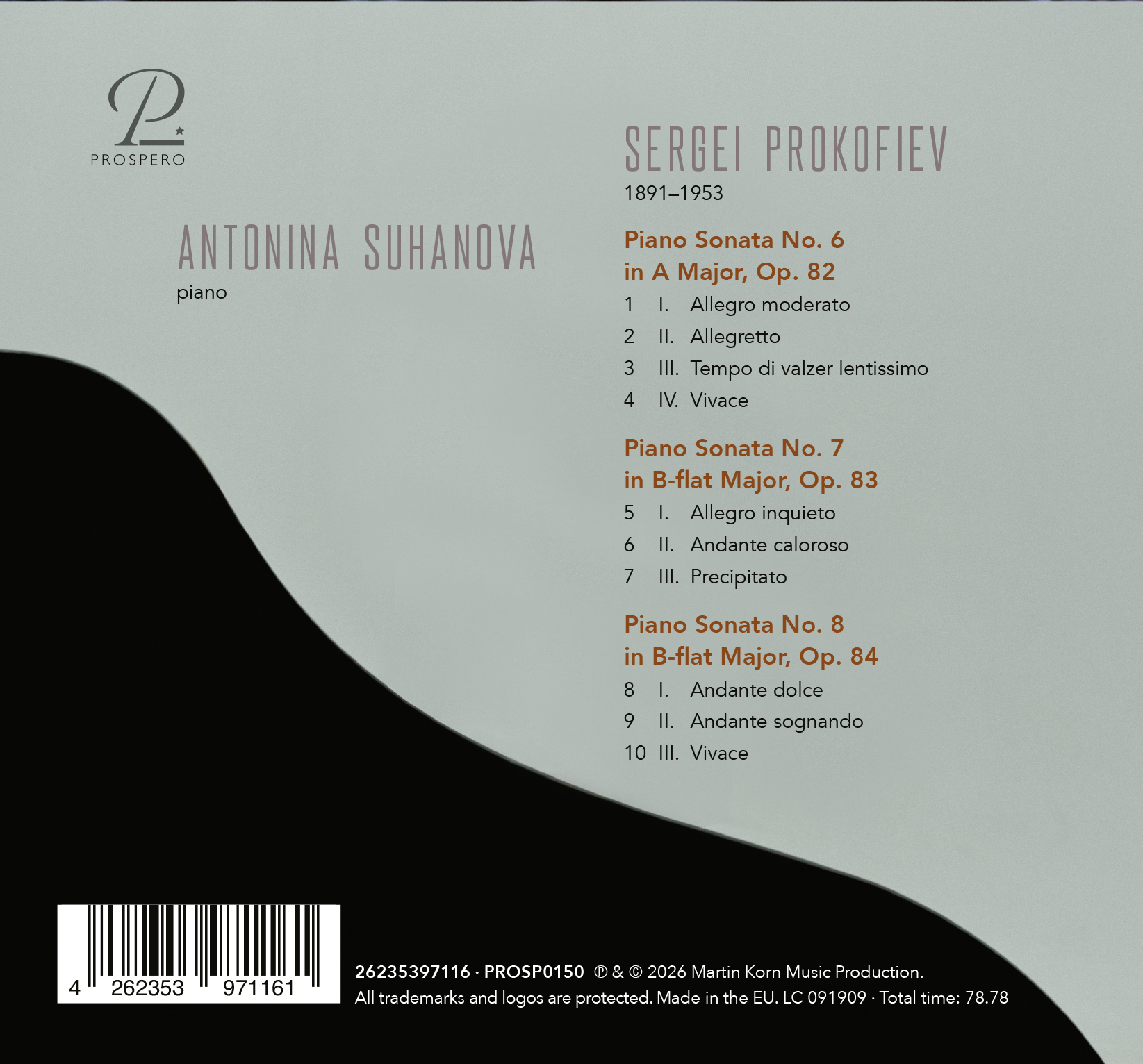
Sergej Prokofjews Klaviersonaten Nr. 6–8 gehören zu den bedeutendsten Werken der Klavierliteratur des 20. Jahrhunderts. Entstanden zwischen 1939 und 1944, gingen sie als „Kriegssonaten“ in die Musikgeschichte ein. Doch wird diese Bezeichnung den Werken wirklich gerecht?
Die Pianistin Antonina Suhanova lädt dazu ein, diese drei Meisterwerke aus einer neuen Perspektive zu betrachten. Zwar entstanden sie in den Jahren des Zweiten Weltkriegs, ihre musikalischen Wurzeln reichen jedoch weit darüber hinaus. Sie spiegeln eine Phase außergewöhnlicher schöpferischer Produktivität, in der Prokofjew einige seiner bedeutendsten Werke schuf. Vor allem aber zeigen sie einen Komponisten, der das Klavier nicht nur virtuos beherrschte, sondern durch das Instrument musikalisch dachte.
Die drei Sonaten verbinden orchestrale Klangfülle mit einer zutiefst idiomatischen Klaviersprache. Ihre technische Brillanz dient nie der bloßen Virtuosität, sondern stets dem musikalischen Ausdruck. Kraftvolle Ausbrüche stehen neben Momenten großer Zartheit, scharf konturierte Rhythmen treffen auf lyrische Kantilenen, Ironie auf Nachdenklichkeit – und immer wieder überrascht Prokofjew mit seiner unverwechselbaren Mischung aus Fantasie, Klarheit und erzählerischer Kraft.
Mit technischer Souveränität und einem feinem Gespür für Prokofjews vielschichtige Klangwelt widmet sich Antonina Suhanova diesen drei außergewöhnlichen Sonaten.
*******
Sergei Prokofiev’s Piano Sonatas Nos. 6–8 are among the most significant works in 20th-century piano literature. Composed between 1939 and 1944, they have gone down in music history as the ‘War Sonatas’. But does this label really do justice to the works?
Pianist Antonina Suhanova invites us to view these three masterpieces from a new perspective. Although they were composed during the Second World War, their musical roots extend far beyond that period. They reflect a phase of extraordinary creative productivity, during which Prokofiev composed some of his most significant works. Above all, however, they reveal a composer who not only mastered the piano with virtuosity but also thought musically through the instrument.
The three sonatas combine orchestral richness with a deeply idiomatic pianistic language. Their technical brilliance is never an end in itself, but always serves musical expression. Powerful outbursts stand alongside moments of great tenderness; sharply defined rhythms meet lyrical cantilenas; irony meets contemplation – and time and again Prokofiev surprises with his unmistakable blend of imagination, clarity and narrative power.
With technical mastery and a keen sense of Prokofiev’s multi-layered soundscape, Antonina Suhanova tackles these three extraordinary sonatas.